

 Home
Home


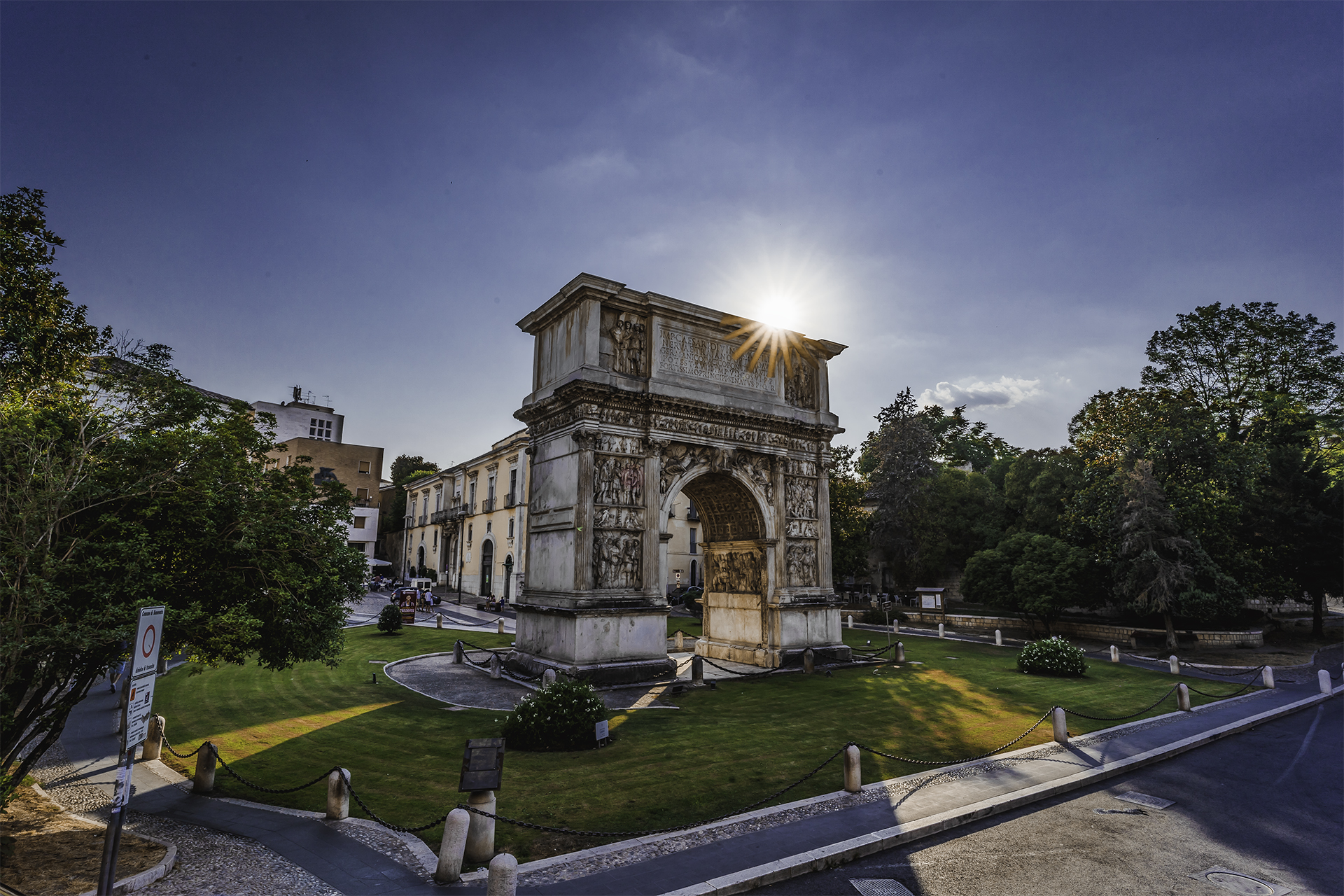
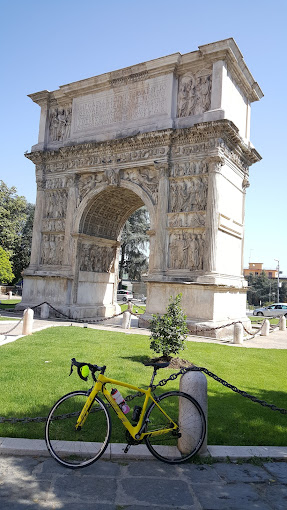
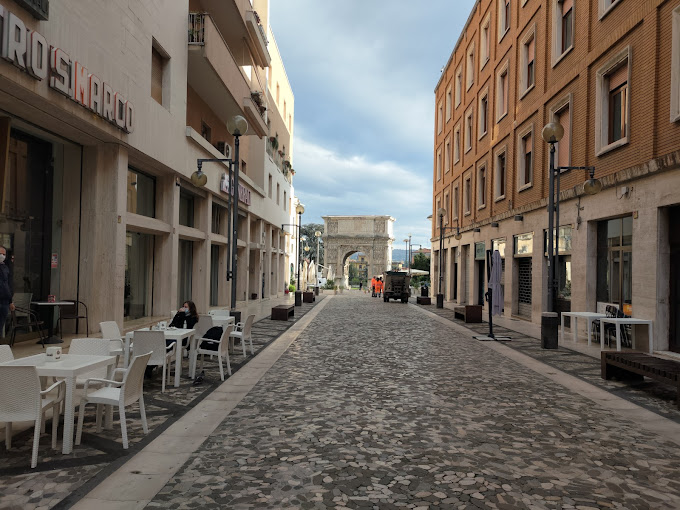
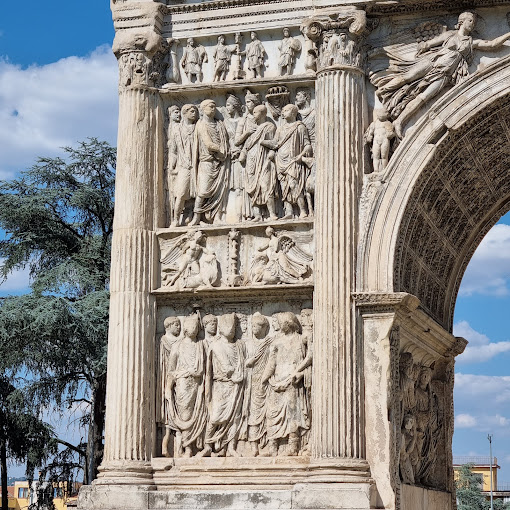
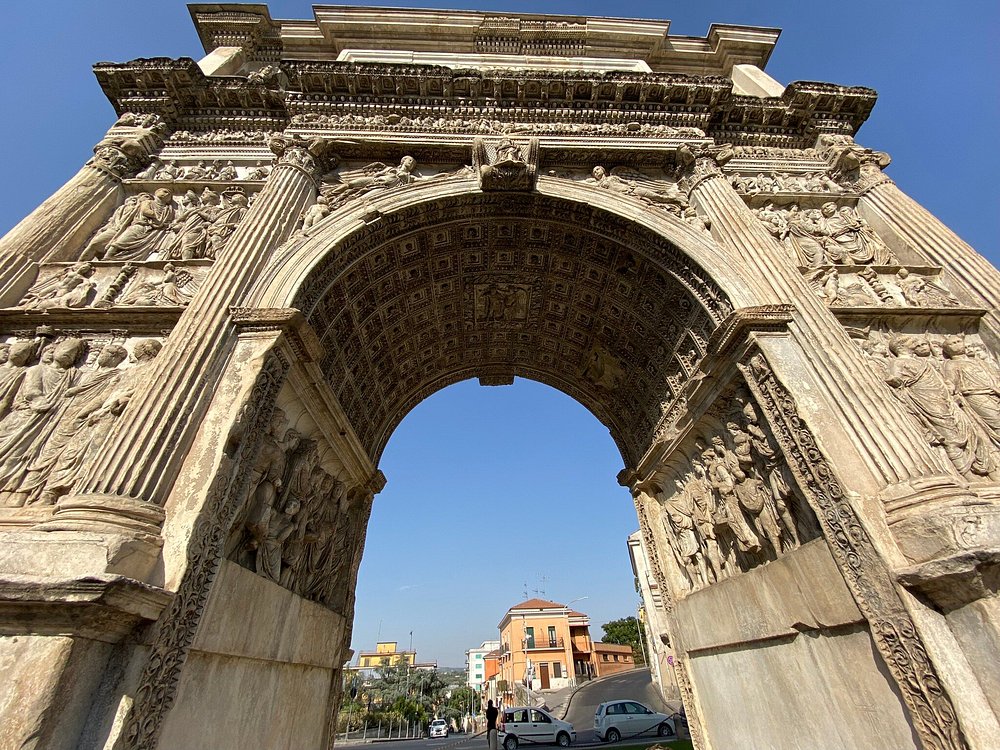
Built between 114 and 117 AD to celebrate the opening of the Via Traiana, the Arch of Trajan is not merely a monumental passageway: it is a true book of stone. About fifteen metres high and made of limestone, it preserves on both sides a remarkably rich sequence of reliefs portraying the emperor not only as a commander, but also as a builder, lawgiver and guardian of Roman order. The carved scenes speak of roads, aqueducts, social reforms, justice and the relationship with the people: a political manifesto engraved into matter, still among the most important examples of Roman art in Italy. Over the centuries the Arch has been admired, studied, represented on coins and observed by artists and architects, becoming a reference point for anyone wishing to understand the narrative power of ancient sculpture. In the Lombard period it was incorporated into the city walls and became known as Porta Aurea, changing from a celebratory monument into a real urban gate. Today it rises at the entrance to the historic centre as a threshold between two times: that of the Empire, which carved its idea of greatness into stone, and that of contemporary Benevento, which continues to recognise itself in this symbol of identity, elegance and public memory.
Curiosity — DID YOU KNOW?
- Speaking reliefs – The scenes celebrate not only conquest, but also Trajan as administrator, builder and lawgiver.
- Porta Aurea – In the Lombard age the Arch was incorporated into the city walls and became one of the main entrances to Benevento.
- Optimus – The inscription honours Trajan with the title Optimus, but the emperor never saw the monument completed: he died in 117 AD, the same year the works ended.
- International inspiration – The monument fascinated scholars, engravers and architects, from Piranesi to the neoclassical imagination.
 Via Traiano, 83, 82100 Benevento


Non ci sono commenti